
What Makes a Photo Feel Like You
Almost every person who steps in front of my camera feels at least a little self-conscious about being photographed. Not because they’re “not photogenic,” and not because they want to hide, but because somewhere along the way, being in front of a camera started to feel loaded.
And for many people, the photography experience itself has become stressful, rushed, or performative.
Oversized smiles. Manufactured joy. A bit of chaos, without a moment of stillness to prepare.
Being photographed often asks people to project confidence, ease, or polish, whether or not they’re actually feeling it. Add in years of beauty standards, filters, family commentary about bodies, and disposable digital images, and it’s no wonder nerves show up fast. Whether or not you feel like you fit a manufactured idea of beauty tends to show up immediately in your confidence on camera.
There’s a difference between a photo that looks technically perfect and one that actually feels like you.
Blog by Jama Finney. Portraits shot in digital medium format - #fujigfx100ii
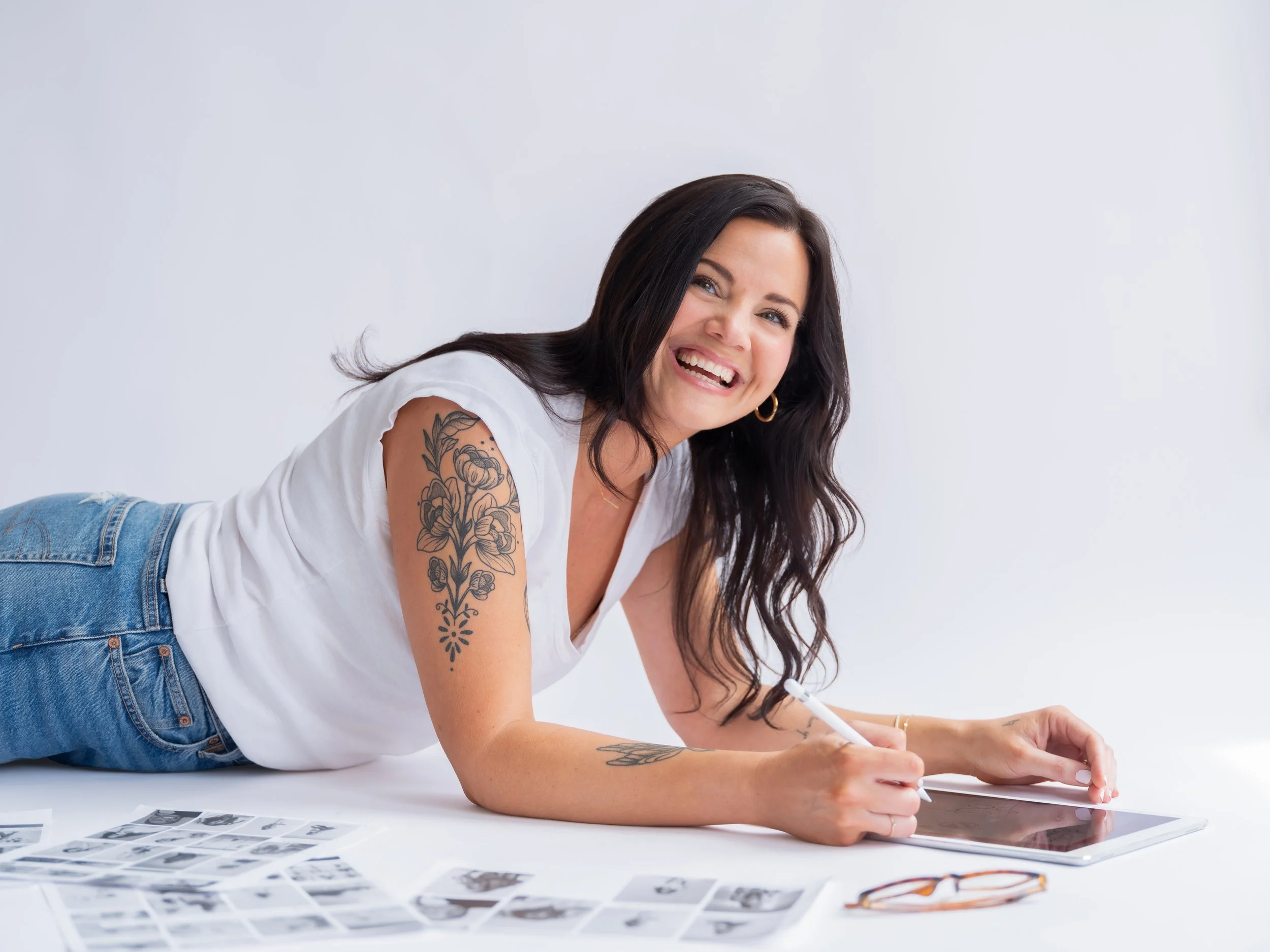
The Invisible Pressure of the Camera
If you’ve been around here for a while, you know I’m endlessly curious about human nature. I pay close attention to body language and energy, and I use myself as a constant test subject, never asking clients to try something I haven’t already explored firsthand. I’m deeply self-observational, and I actively work on my own self-worth and sense of value, both personally and professionally.
Regardless of how aligned or prepared a session feels ahead of time, there’s a pattern I notice almost every time.
We humans have a default setting to switch into “on” mode when a camera appears.
Toothy grins
Hands awkwardly placed
Shoulders creeping up toward ears
Nervous chatter.
When I put the camera down to connect through conversation or make a small adjustment, body language softens. When the camera comes back up, the nerves return.
That reaction isn’t vanity. It’s self-protection.
Years of selfies taken from exact angles. Disposable one-use images. Filters. Social comparison. All of it trains us to brace the moment a lens appears. The psychology behind it is fascinating, and completely human.
Many photography experiences unintentionally reinforce this pressure. Relying on rigid posing systems that don’t fit all bodies. Moving too quickly. Not allowing time to breathe into the moment. Lights flashing. The photographer firing through dozens of nearly identical frames without shifting perspective or tuning into the person in front of them.
I’ve been there myself. Often, it’s less about the client and more about the photographer being pulled between connection and technical execution at the same time.
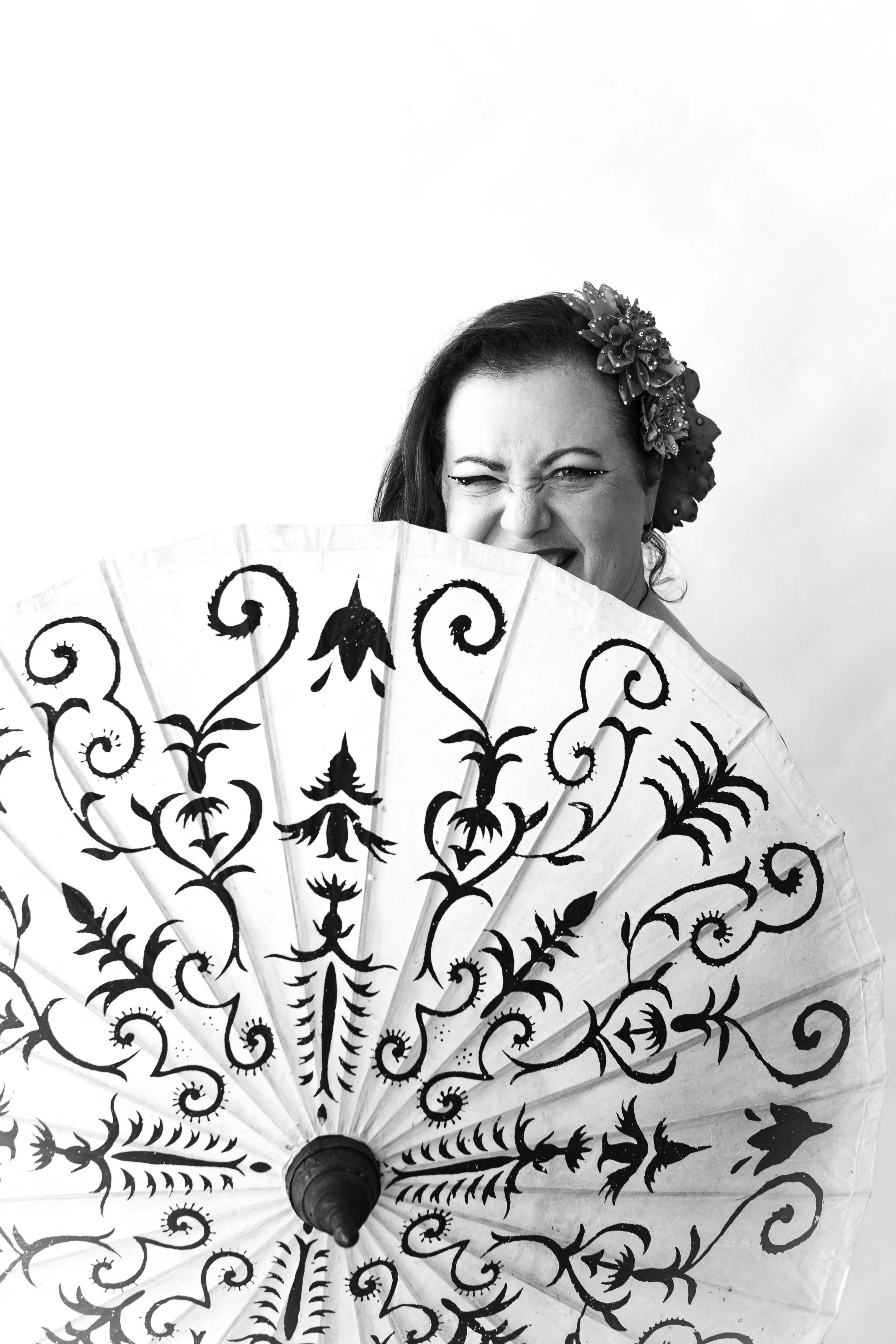
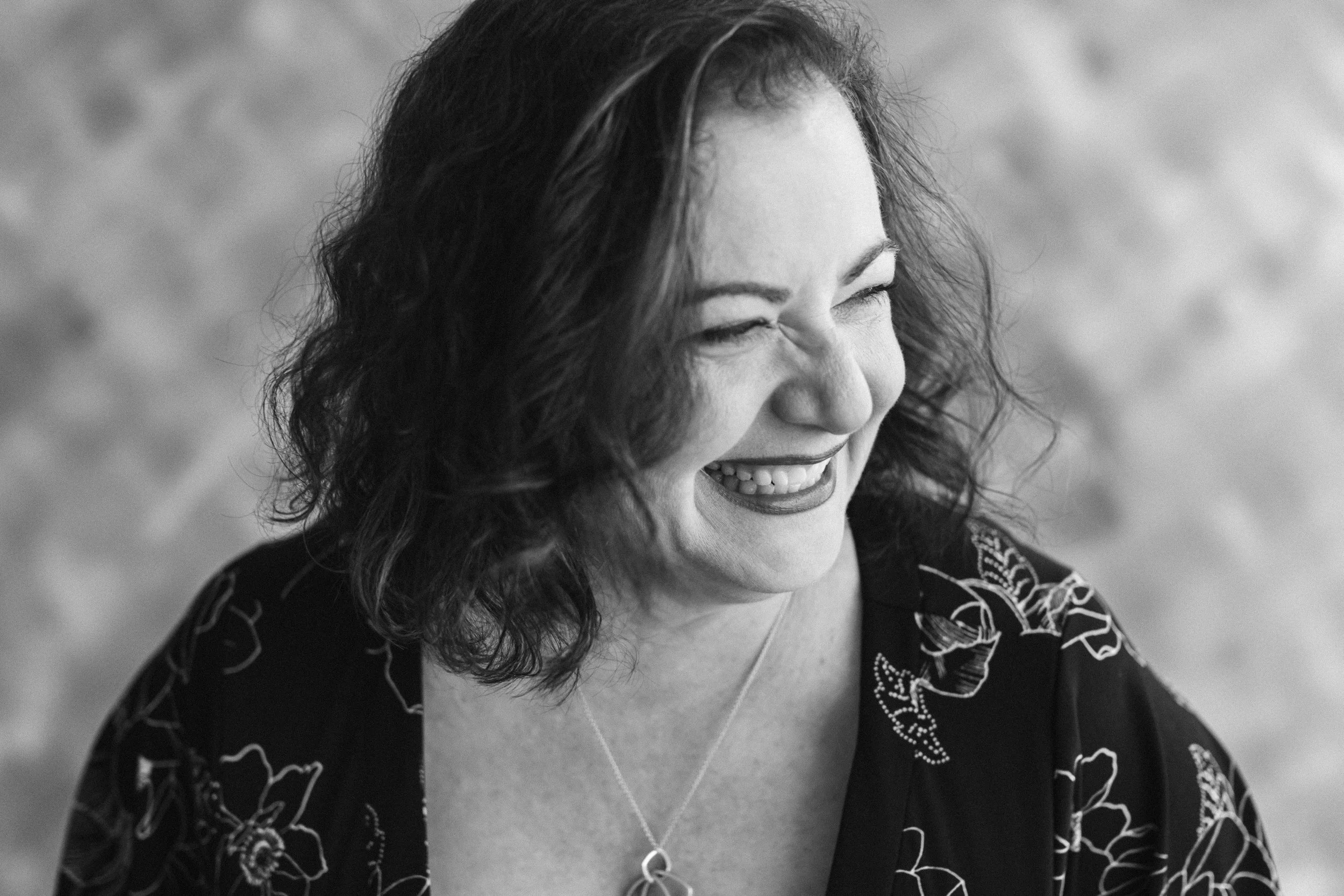
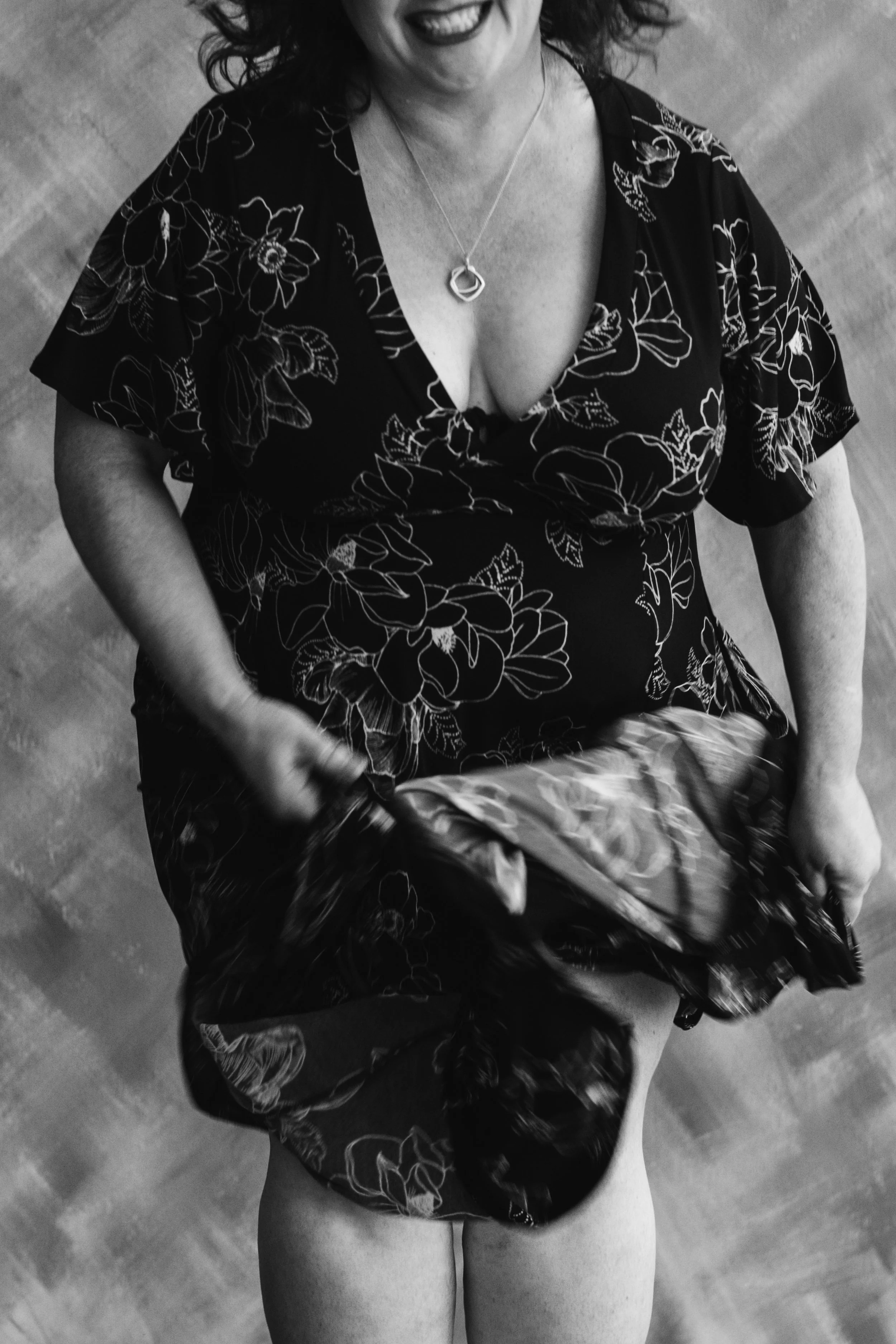
Why Performance Shows Up in Photos
There’s a concept that runs through the work of many of my favorite photographers, the difference between making someone feel watched versus making them feel held.
When a shoot is rushed or underdeveloped, there’s no room for the in-between moments. Connection drops away. Direction replaces dialogue. The experience becomes transactional instead of creative.
In that environment, performance takes over.
Clients start behaving the way they think they’re supposed to in a photoshoot. Photographers default to calling out a familiar list of poses. Everyone is doing the thing, but no one is really arriving.
When people feel watched instead of held, they perform. When they feel held, they show up as themselves.

What Changes When Performance Isn’t Required
This is the skill I’ve prioritized developing over the years, even above many technical aspects of the craft.
When a session isn’t rushed, when common ground has been established, and when someone isn’t trying to get it right, something subtle but powerful happens. Breathing slows. Shoulders drop. Eye contact lasts a beat longer.
There’s an almost audible sigh of relief.
People stop projecting and start inhabiting the moment. That’s when you’re no longer photographing an idea of someone. You’re photographing a real, present human being.
The Role of Preparation (Without Over-Control)
I love that our life stories influence how we show up in our work. Between my background in event planning, my Virgo love of details, and the quiet ways motherhood has shaped my instincts, preparation is a tool I use to remove uncertainty, not to control the outcome.
Preparation, for me, isn’t about scripting every second. It’s about creating enough clarity that people don’t feel like they need to brace themselves.
When I take time to listen deeply, understand the story we’re building visually, and guide someone through the process without micromanaging, there’s space for the moments that can’t be planned. Those moments often matter most.
Knowing what doesn’t matter in a session is just as important as knowing what does.
Alignment Over Perfection
My philosophy has evolved alongside my work, as it should.
Early on, I was aiming for technically perfect photos. Lighting dialed in. Perfected posing. Styling just right. As those skills sharpened, I started noticing something important. A “perfect” photo can still feel wrong.
You see it in forced smiles and stiff shoulders. You feel it in the absence of ease.
Alignment isn’t technical. It’s emotional. People recognize themselves immediately when a photo is right, whether it’s a branding session, a portrait, or a moment meant to mark where they are in life.
And there is nothing better than a client who is truly feeling themselves in a session. Not one damn thing beats it.
Feeling like yourself in photos shouldn’t be rare.
It shouldn’t require a glass of wine or pretending you’re someone you’re not. When the process is thoughtful and the space feels safe, what shows up isn’t a performance. It’s recognition. And most people know it instantly when they see it. They don’t ask if the photo is good. They just say, that feels like me.
Branding sessions are now booking.
If you’re ready to explore this for yourself, you can learn more about working together here:
Q: Why do I feel so awkward in photos?
A: Most people feel awkward in photos because they’re trying to perform instead of simply being present. When a photography experience feels rushed or overly directed, self-protection kicks in. A calmer, more intentional process helps people feel at ease, which changes everything.
Q: How can a photographer help someone feel comfortable on camera?
A: Comfort comes from pacing, preparation, and trust. When a photographer is comfortable in their own craft, takes time to listen, removes unnecessary pressure, and guides without over-directing, people stop bracing and start showing up as themselves.
Q: Is this approach only for branding photography?
A: Not at all. Feeling at ease matters just as much in personal branding sessions as it does in portrait work or any moment meant to reflect who you are. The goal is the same: photos that feel aligned, not performative.
Creative Credits
Locations: Loft Creative Studio, Iceland
Hair and Makeup: Pam Butler with The Beauty Patrol
Client: Kristyna Zaharek, Katie Rollins, Kevin Finney, Jacob Finney, Cupcake Loucks
Photography: @jamafinneybrandphoto
